Information questions and suggestions often have the same form, but they serve different functions. Suggestions that are formed as questions can be analyzed as indirect speech acts. This is not the case with information questions.
Consider the question "Why don't you eat meat?" One interpretation is that the hearer is a vegetarian, and the speaker wants to know the reason for this dietary choice. However, another interpretation is that of a suggestion, an indirect speech act. The speaker may be advising the hearer to eat meat. Here's a possible context. "You know, it's important to get more protein in your diet. Why don't you eat meat?" In this particular context, it's clear that the speaker isn't asking an information question but rather making a suggestion.
The question "Why don't you eat meat?" is ambiguous. It can be either an information question or a suggestion. Both interpretations are possible. If we change the question to "Why not eat meat?" only one interpretation is possible. Here we have a suggestion. This can't be interpreted as an information question.
Though information questions and suggestions often look the same, they serve different purposes. Suggestions are indirect speech acts and not genuine questions of information. If we change the auxiliary from don't or doesn't to not, there's no ambiguity. Then we must interpret the question as a suggestion.
Tuesday, March 22, 2016

Wednesday, March 2, 2016
Musical Notation
Modern musical notation has its origins in European classical music and is now used throughout the world. This modern style of notation uses a five-line staff. Pitch is indicated by the placement of notes on the staff.
The staff at the top is known as the treble clef and is for notes played on the right hand. The staff at the bottom is known as the base clef and is for notes played on the left hand. On the first line of the treble clef is E followed by the notes G, B, D and F. Notes with a pitch outside of the staff can be represented by ledger lines.
Note duration is an important element of musical notation. The duration of notes is illustrated here:

Dotted notes are also used in musical notation. A dotted note is a note which has a small dot written after it. The first dot increases the value of the original note by half. With every additional dot, the value is progressively halved. For example, a note with one dot has a value of 1.5, a note with two notes 1.75 and a note with three dotes 1.875.
Guido of Arezzo, an Italian of the medieval era, is considered the inventor of modern musical notation. His staff notation replaced an earlier form of notation known as neumatic. Unlike staff notation, neumatic was written on only four lines. Guido of Arezzo was a Benedictine monk who created the most popular system of musical notation in use today.
The staff at the top is known as the treble clef and is for notes played on the right hand. The staff at the bottom is known as the base clef and is for notes played on the left hand. On the first line of the treble clef is E followed by the notes G, B, D and F. Notes with a pitch outside of the staff can be represented by ledger lines.
Note duration is an important element of musical notation. The duration of notes is illustrated here:
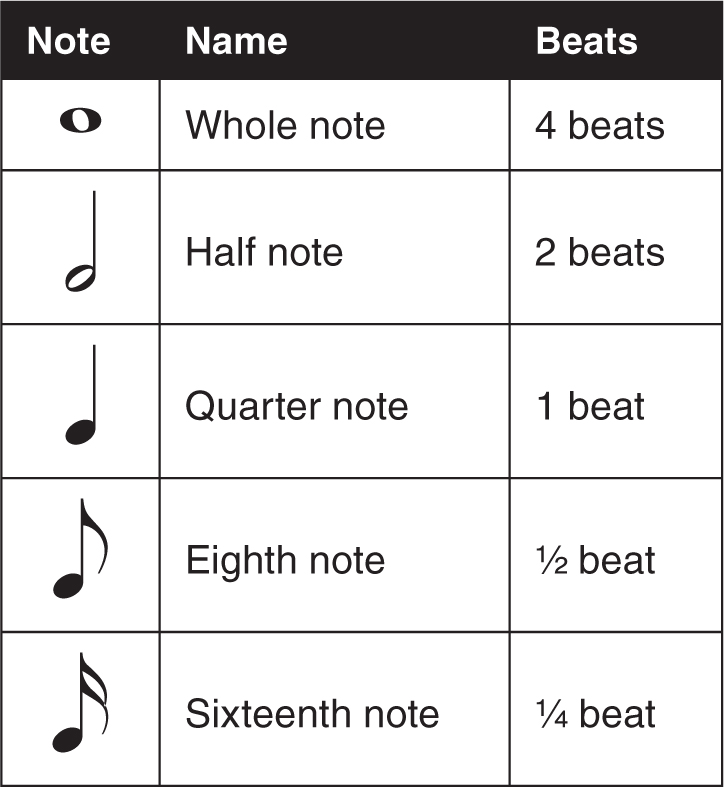
Dotted notes are also used in musical notation. A dotted note is a note which has a small dot written after it. The first dot increases the value of the original note by half. With every additional dot, the value is progressively halved. For example, a note with one dot has a value of 1.5, a note with two notes 1.75 and a note with three dotes 1.875.
Guido of Arezzo, an Italian of the medieval era, is considered the inventor of modern musical notation. His staff notation replaced an earlier form of notation known as neumatic. Unlike staff notation, neumatic was written on only four lines. Guido of Arezzo was a Benedictine monk who created the most popular system of musical notation in use today.
Wednesday, February 3, 2016
A Little Bird
Alexander Pushkin wrote plays, novels and poems. One of his poems is A Little Bird. Here is a translation:
A Little Bird
In alien lands I keep the body
Of ancient native rites and things.
I gladly free a little birdie
At celebration of the spring.
I'm now free for consolation
And thankful to almighty Lord:
At least, to one of his creations
I've given freedom in this world!
In this poem we learn that the narrator follows ancient traditions when abroad. To celebrate spring, the narrator releases a little bird, a symbol of spring, into the wild. The narrator feels sad over the loss of the bird, but also feels thankful. The reason is that the little bird, one of the smallest of God's creations, has now been given freedom.
The poem A Little Bird speaks of traditions, a little bird and spring. The narrator takes delight in giving freedom to a little bird, one of the world's smallest creations. This is done in spring, a season which marks a season of rebirth and revitilization for not only plants and flowers, but also for a little bird.
Thursday, January 14, 2016
Golden Mean
Aristotle referred to the desirable medium between two extremes as the golden mean. He explained that the golden mean of two opposite vices was a virtue. This mirrors the view that extremes are never good and that it's always best to do everything in moderation.
For example, we can say that both wastefulness and stinginess are two extreme vices. Wastefulness can be defined as the misuse or overuse of money and goods, and stinginess can be defined as a lack of spending and charity. The happy medium of the two is thus generosity. This is a virtue which is found between the two vices of wastefulness and stinginess.
Another example is the vices of pride and fear. Pride can be defined as an inflated ego or a lack of humility. However, fear can be defined as a lack of self-esteem or belief in one's own abilites. The desirable medium of these two vices is confidence. This is a virtue which can be placed between the two extremes.
The problem with this view of the golden mean is that it is not always easy to determine exactly where the desirable medium lies. What one considers confidence another may consider pride, and what may be considered a vice, i.e., fear, may actually be appropriate in situations where caution is advisable. Though not all philosophers agree that the desirable medium between two opposite vices is always a virtue, the philosophical view of the golden mean is a concept that has its origins in the teachings of Aristotle.
Monday, December 7, 2015
Types of Requests
Requests are speech acts that allow for the possibility of refusal. They can be granted or refused by the hearer. Requests can be direct and indirect. In fact, there are many types of requests. Let's examine a few.
Some requests concern the hearer's ability to perform a task. For example, "Can you pass me the salt?" asks a yes/no question. However, this is not truly a yes/no question because the speaker doesn't expect a yes/no answer. This is a request.
Requests can be expressed as a desire. An example is "I would like you to do this now." This is a statement with the polite expression "would like" that functions as a request. If we change "would like" to "want," the request becomes stronger.
Requests can also be expressed in future tense. Consider "From today officers will wear ties at dinner." Though this is a future declarative, it is also a request. However, it is clear that in this case the hearer is not expected to deny the request. In this case the request can be analyzed as an imperative.
In certain cases, requests concern the willingness of the hearer to perform a task. For example, "Do you want to hand me that hammer?" is a yes/no question, and is also an indirect request.
Requests sometimes offer advice. For example, "You should be more polite to your mother" can be analyzed as a request. It is the speaker's desire that the hearer will be more polite to his/her mother in the future.
Sometimes requests are expressed as embedded sentences. Consider "Could I ask you to take off your shoes?" This is expressed as a yes/no question and "take off your shoes" is a clause inside the question.
A direct request is an imperative such as "Lend me a pen." To make this more polite, we can add "please." This can be changed into a question by asking "Could you please lend me a pen?"
Requests can also be expressed as permission. For example, "May I borrow your pen?" requests permission and is structured as a yes/no question.
Requests can be expressed in many different ways. They can be direct or indirect. Other types of requests offer advice, express desire, ask permission and concern ability. Requests can be categorized into many different types.
Accents of Canadian English
Canadian English is very uniform. It exhibits far less variety than many other varieties of English. Nevertheless, there are regional differences.
The diphthong in words such as about tends to be pronounced differently in western Canada and the Toronto area. In western Canada the diphthong is usually pronounced with a more advanced articulation than in the Toronto area.
The vowel in moose is a back vowel in the Atlantic provinces but is pronounced with a more advanced articulation in the rest of the country. It tends to be especially advanced in the western part of the country.
In words such as car, heart and park the vowel is a central vowel in the Atlantic provinces and a back vowel in the rest of the country. This is the opposite of the vowel in moose, a vowel which is more retracted in the Atlantic provinces.
In words such as case and face, the vowel is often a monophthong, a pure vowel, in the prairie provinces (Alberta, Saskatchewan and Manitoba) and a diphthong in the rest of the country. The pronunciation of face as a monophthong is typical of Scottish and Irish English.
Though Canadian English is usually spoken very similarly across the country, regional differences do exist. Many of these differences are reflected in the pronunciation of certain vowels. These differences can be heard in the English of the west, the prairie provinces, the Toronto area and the Atlantic provinces.
Monday, November 30, 2015
The Suffix -ish in Spanish
The English suffix -ish is a diminutive. When added to a root, it gives an approximate meaning. For example, the word "eightish" means around eight and "yellowish" means close to yellow. In Spanish, approximate colours aren't formed with an invariable suffix as in English.
Here are ten approximate colours in Spanish:
red reddish rojo rojizo
blue bluish azul azulejo
yellow yellowish amarillo amarillento
black blackish negro negruzco
white whitish blanco blancuzco
pink pinkish rosa rosáceo
green greenish verde verdoso
orange orangish naranja anaranjado
brown brownish pardo pardusco
grey greyish gris grisáceo
Compared to English, we notice that approximate colours in Spanish aren't formed with a single suffix form. With the colours black and white, the word final -o becomes a -u and the suffix -zco is added. In the case of brown, the suffix is spelt -sco. The colours grey and pink add the suffix variant -áceo. The other colours are formed with different variants.
To form approximate colours in English, the rule is simple. The suffix -ish is added to the root. In Spanish, however, approximate colours are formed with a single suffix, but this suffix has many variants.
Subscribe to:
Posts (Atom)
-
The opera Turandot features an Asian princess who many men wish to marry. However, if they wish to do so, they must answer three riddles c...
-
 Cebuano, one of the languages spoken in the Phillipines, has infixation. This is a morphological process in which a bound morpheme attaches ...
-
Trisyllabic laxing is a process in English which affects tense vowels and diphthongs. They become lax in word formation when followed by two...